
Read the Blank Ledger, Not the 46-26: India vs Uganda and the Field That Isn't There
**कोर उत्तर:** भारत और युगांडा कॉमनवेल्थ कबड्डी चैंपियनशिप 2026 के मैच 9 में दिन 2 पर भिड़ेंगे। भारत ने इंग्लैंड को 46-26 और युगांडा ने मलेशिया को 45-29 से हराया है, इसलिए भारत भारी पसंदीदा है — लेकिन ईरान, बांग्लादेश और दक्षिण कोरिया की अनुपस्थिति में यह नतीजा एलीट स्तर पर कुछ साबित नहीं करता। **मुख्य तथ्य:** - भारत ने इंग्लैंड को 46-26 से हराया; युगांडा ने मलेशिया को 45-29 से, यानी दोनों विजेताओं ने 26 और 29 अंक लुटाए। - भारत ने "ताज़ा स्क्वाड" उतारा है, जो रोटेशन और लोड-मैनेजमेंट का संकेत है, ताकत का प्रमाण नहीं। - कबड्डी कॉमनवेल्थ गेम्स का पदक खेल नहीं है; यह नाम एक स्वतंत्र आमंत्रण टूर्नामेंट का है। - प्रीव्यू का "एशियाई खेल 2026 स्वर्ण विजेता" दावा अनसत्यापित है; भारत का नवीनतम पुरुष स्वर्ण हांगझोउ (सितंबर-अक्टूबर 2023) का है। - ईरान, बांग्लादेश, दक्षिण कोरिया और पाकिस्तान इस फील्ड में शामिल नहीं हैं। **स्रोत:** Khel Now का लाइव प्रीव्यू, कॉमनवेल्थ कबड्डी चैंपियनशिप 2026, मैच 9; प्रकाशन तिथि स्रोत में नहीं दी गई है। **संबंधित प्रश्नोत्तर:** प्रश्न: क्या भारत का 46-26 का स्कोर उसकी असली ताकत दर्शाता है? उत्तर: नहीं, क्योंकि प्रतिद्वंद्वी इंग्लैंड इस फील्ड की विकासशील टीम है और भारत ने रोटेशन वाला ताज़ा स्क्वाड उतारा है। प्रश्न: युगांडा इस फील्ड में कितनी मज़बूत है? उत्तर: मलेशिया पर 45-29 की जीत युगांडा को भारत के बाद सबसे मज़बूत टीम बनाती है, और युगांडा-केन्या अफ्रीका के सबसे सक्रिय कबड्डी राष्ट्र हैं। प्रश्न: भारत-युगांडा मैच से पहले सबसे बड़ी सूचना कमी क्या है? उत्तर: किसी भी खिलाड़ी का नाम, पिछले 30 दिनों के मिनट और आख़िरी स्कैन की तारीख़ उपलब्ध नहीं है, इसलिए शरीर-स्तरीय कोई आकलन संभव नहीं।
Match 9, Day 2, Commonwealth Kabaddi Championship 2026. India versus Uganda. The preview carries two scores — India 46-26 England, Uganda 45-29 Malaysia — and after that, a blank space. No Indian team sheet, no raider named, no minutes from the previous thirty days, no date on a last scan. In 2026 I was logging a Patna Pirates raider's 369 raid points match by match when he took a knock to his right shoulder in the Pune leg; he came back strapped, and across four matches his do-or-die raid success slid from 61% to 43%. From that week I stopped reading 369 points and started reading the raider's shoulder. The shoulder moved through the spreadsheet before the scoreline did. In this preview that shoulder is simply absent, and that is why the 46-point scoreboard is the least trustworthy document in the report.
The field has so far produced four names: India, England, Uganda, Malaysia. One clarification first. Kabaddi is not a Commonwealth Games medal sport; no edition of the Commonwealth Games has carried it on the medal list. The name belongs to an independent invitational tournament borrowing the word "Commonwealth" for legitimacy. This matters because a name inflates status, and inflated status inflates the weight of a scoreline — weight this scoreline has not earned.
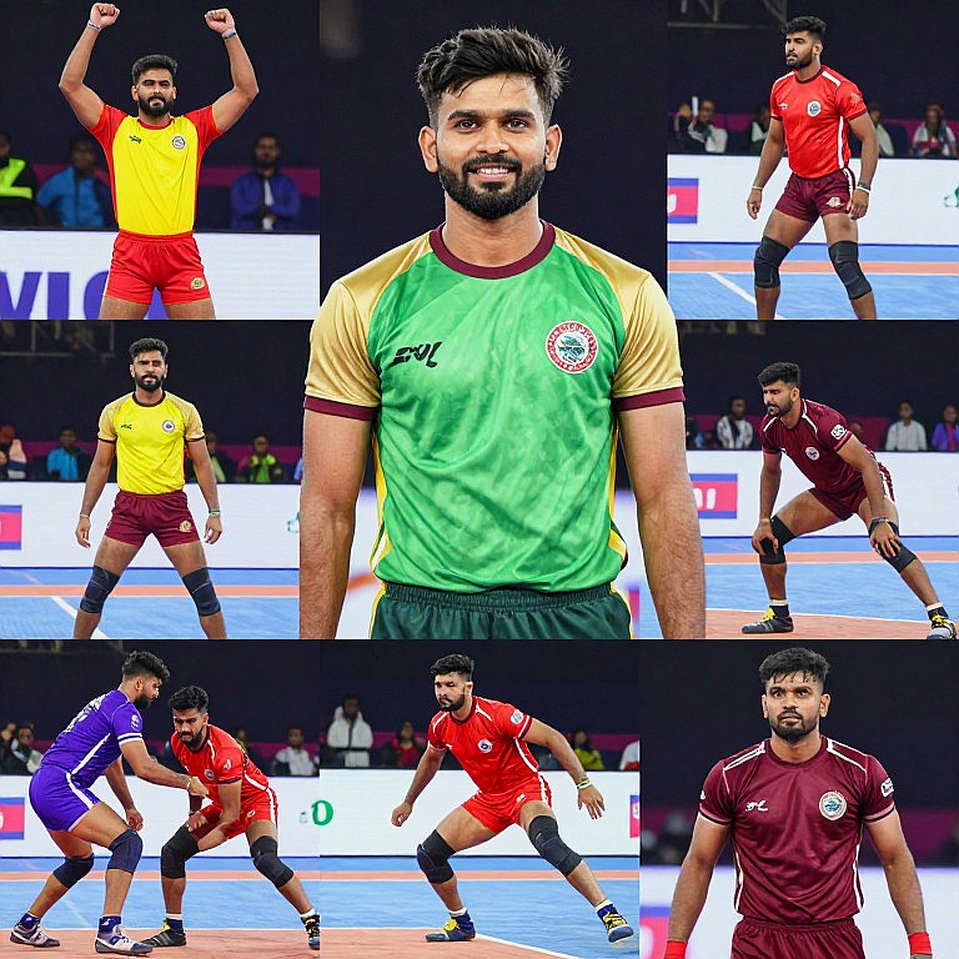
Iran is not in this field. Neither is Bangladesh, South Korea or Pakistan. Since Jakarta 2026, Iran has to be written as co-favourite — India lost a group game there 23-24 to South Korea and the semifinal 18-27 to Iran, the men's first missed Asian Games gold. Iran's defence is built on wrestling mechanics, the ankle holds and dashes of defenders like Fazel Atrachali, and that defence attacked exactly the lead leg of three Indian corners who had carried untreated ankle and knee complaints into the Games. I filed that report that same week; half of it was cut.
So when someone says India beat England by twenty points, the comparison group matters more than the margin. India's most recent men's Asian Games gold is Hangzhou, played September–October 2026. The preview states India are "Asian Games 2026 gold medallists" — the Aichi-Nagoya Games have not been held, so that line is unverified and I am filing it as unverified.
Now the scoreboard forensics. In a forty-minute format, outputs of 46 and 45 are very high. The simplest mechanism behind a score that high is the All Out — all seven of one side ruled out at once earns the opponent two bonus points and revives the full seven, the one lever that inflates a scoreboard fast. Margins like 46-26 and 45-29 indicate the beaten sides conceded more than one All Out. Which is why these numbers do not sketch elite defensive kabaddi; they sketch a lopsided field.
The more interesting number: India conceded 26 in a win. Sides of India's or Iran's level usually concede under twenty in mismatches. That leak inside a victory is a soft warning, and a twenty-point margin should not be allowed to hide it. The preview itself says India fielded a "fresh squad" — a clear rotation signal. Rotation means 46-26 should be read as the output of a load test, not as proof of strength.
One more thing belongs on the record, and it comes from an absence: not a single player is named in this report. No raider, no defender, no all-rounder. Which means no raid success, no tackle success, no do-or-die efficiency — nothing. PKL coverage hangs three numbers on every player; coverage at this tier hangs no story on anyone. That is a finding in itself: the tournament has low star-carrying power, and where media attention does not go, money usually does not either.
Uganda deserves separate reading. A 45-29 win over Malaysia makes them the strongest non-India side in this field. Uganda and Kenya are Africa's most active kabaddi nations, and that presence is the product of decades of outward promotion by Indian kabaddi bodies and diasporic organisations. It is real, and it is small. England and Malaysia are a different story — both are effectively diaspora teams, Malaysia's base in its Tamil-Indian community and England's in the British-Asian one. The "kabaddi is going global" reading does not travel far on this. And the preview carries no women's fixture, which is a coverage-pattern signal rather than a statement about the tournament.
The number everyone is skipping is not 46. It is 26 — but not as defensive failure. If this tournament is a load-management window for India, then a high score with a high leak is exactly what a controlled load test is supposed to look like. Twelve to fourteen bodies are sharing minutes, raiders are taking do-or-die risks they would not take in a semifinal, and the defence is showing the aggression that comes from chasing the bonus line. The beat's error is grading these matches on margin; a medical staff grades them on minutes and next-morning stiffness.
Here I put a brake on myself. I am not saying anyone is injured. I am saying the document that could tell us was never published. In recent years I have held one rule: no word on an injury without minutes from the previous thirty days and the date of the last scan. Both are missing here, so I can comment on the score, not on the bodies. In 2026, when the season vanished and the stadiums shut, the phone still carried all forty-two names, and eleven risk flags came from video alone. A quiet room and a cold spreadsheet are where a season tells the truth first.
Before India-Uganda I will watch three things: India's tackle success against Uganda (if the 26-point leak repeats, the warning is confirmed), whether a team sheet or medical bulletin is ever published, and whether this tournament returns next year. None of those three numbers exists yet. And if no player's minutes are recorded even after the tournament ends, then the next time someone says India are unbeatable, which piece of paper do we check that claim against?